
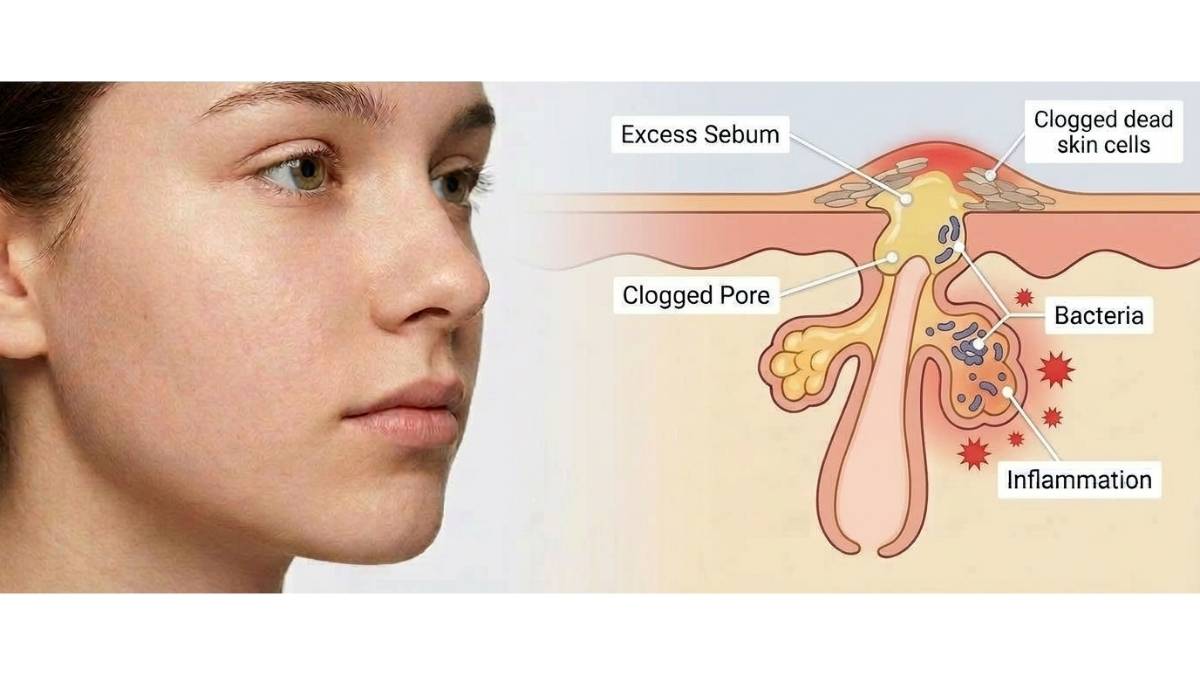
If you’ve ever stared in the mirror before school and wondered why your face seems to be waging war against you, you’re not alone. Around 85% of teenagers experience acne at some point, according to the American Academy of Dermatology. But here’s what most people don’t tell you: pimples aren’t a hygiene problem, a diet failure, or a sign that you’re doing something wrong. They’re the direct result of a biological process happening deep inside your skin.
Understanding why teens get pimples, the real science behind it, is the first step to managing breakouts with confidence rather than shame. This article breaks down what’s actually happening in your skin, why teenage acne is uniquely intense, and what modern solutions like hydrocolloid pimple patches can do to help.
The Hormone Trigger: Why Puberty Changes Your Skin
The root cause of teenage acne is hormonal, specifically, a surge in androgens (male sex hormones present in all genders) during puberty. As the NHS explains, increased testosterone during puberty stimulates the skin’s oil-producing sebaceous glands to work overtime, generating far more sebum than the skin actually needs.
Testosterone is converted in skin tissue to a more potent hormone called dihydrotestosterone (DHT), which has a particularly strong effect on sebaceous glands. A 2025 study published in Endocrine Connections confirmed a clear association between rising DHT levels and acne severity during puberty.
This is why acne typically starts around ages 11–13 in girls and 13–15 in boys, right when androgen levels spike. Hormone fluctuations throughout the menstrual cycle can also cause breakouts to flare up, particularly in the week before a period.
Why sebum is both essential and problematic
Sebum itself isn’t the enemy. It’s an oily substance your skin produces to lubricate and protect itself. The problem arises when the sebaceous glands produce too much of it. Excess sebum mixes with dead skin cells inside hair follicles (pores) and forms a blockage. This blocked pore, commonly called a whitehead, is the starting point for most pimples.
When a whitehead is exposed to air, it oxidizes and turns dark, becoming a blackhead. Neither is caused by dirt. The darkness of a blackhead is a chemical reaction, not a sign that your pores are unclean.
The Bacteria Factor: How Pimples Become Inflamed
A blocked pore creates the perfect low-oxygen environment for a bacterium called Cutibacterium acnes (formerly P. acnes) to multiply. This bacterium lives on all skin but thrives inside clogged follicles where sebum provides an ideal food source.
As C. acnes proliferates, the immune system sends white blood cells to fight the infection. This immune response causes the redness, swelling, and tenderness of an inflamed pimple. The more severe the bacterial colonization, the more intense the inflammation, and the higher the risk of scarring.
This is exactly why picking or popping a pimple makes things worse: squeezing forces bacteria deeper into surrounding tissue, spreading the infection and increasing the chance of permanent scarring. The better approach is to treat the pimple without disrupting the skin barrier, which is precisely the mechanism behind hydrocolloid patches.
What Actually Helps: Treating Teen Acne the Right Way
Effective teen acne treatment needs to address multiple steps in the chain at once. Washing your face more aggressively doesn’t help and can worsen irritation. What works is a targeted, gentle approach combining salicylic acid (unclogs pores), tea tree oil (kills C. acnes bacteria), centella asiatica (soothes inflammation and supports collagen), and hydrocolloid dressings (absorb pus while skin heals underneath).
This is the science behind modern Korean pimple patches. BossCare+ Pimple Patches combine all four actives into a single ultra-thin, invisible patch formulated specifically for teen skin. The unique Scar-Guard Technology doesn’t just treat the active breakout, it supports the skin’s healing process to help prevent post-acne marks that can linger for months.
Why Teenage Acne Is Different from Adult Breakouts
Teen acne is primarily driven by systemic hormone surges affecting the entire face, breakouts across the T-zone (forehead, nose, chin) and sometimes the back and chest. Adult hormonal acne, by contrast, tends to concentrate on the lower jaw and chin, linked to stress hormones and premenstrual shifts.
Teenage skin responds more quickly to treatment, cell turnover is faster, and the inflammatory cycle can be interrupted more easily with the right ingredients. Effective treatment during the teen years not only clears active breakouts but can prevent long-term scarring significantly harder to treat later.
The genetics piece
Genetics influence how sensitive your sebaceous glands are to androgens and how your immune system reacts to C. acnes. If both parents had significant teenage acne, there’s a meaningful chance of more severe breakouts, according to NHS guidance. Breaking out despite a solid skincare routine isn’t a personal failing, you may have inherited a more reactive skin type.
Other Factors That Make Teen Acne Worse
Stress increases cortisol, stimulating androgen activity and sebum production. Research cited by the American Academy of Pediatrics shows teenagers consistently experience worse acne during high-stress exam periods.
Diet plays a more modest role than most people believe. High-glycemic foods may contribute to acne by spiking insulin levels, which elevates androgen activity, but the connection is not as direct as “chocolate causes pimples.”
Comedogenic skin care products, heavy, oil-based formulas, can clog pores and trigger breakouts. Non-comedogenic, water-based products are significantly less likely to cause problems.
Touching your face transfers bacteria and oil from hands to skin. Breakouts on the chin and cheeks often correlate directly with the habit of resting your face in your hands.
Key Takeaways
- Teen acne is caused by androgen hormones triggering excess sebum production during puberty, a biological process, not a cleanliness issue.
- Excess sebum combines with dead skin cells to block pores, creating conditions for C. acnes bacteria to multiply and cause inflamed pimples.
- Picking or popping pimples significantly increases the risk of permanent scarring, targeted treatment without skin disruption is always better.
- Effective teen acne treatment combines salicylic acid, tea tree oil, and centella asiatica, the exact formula in BossCare+ Scar-Guard Patches.
- Secondary factors like stress, diet, and comedogenic products can worsen hormonal acne but are not the root cause.
- Early, consistent treatment during teen years helps prevent long-term scarring significantly harder to address in adulthood.
Frequently Asked Questions (FAQs)
Why do teens get pimples more than adults?
Teenagers experience a dramatic surge in androgen hormones during puberty that directly stimulates sebaceous glands to produce excess oil. This creates ideal conditions for clogged pores and bacterial growth. Adults can still get acne, but the hormonal surge of puberty makes teenage breakouts more widespread and often more intense.
Does washing your face more often prevent teen acne?
Over-washing can actually worsen acne by stripping the skin’s natural barrier, causing it to overproduce oil in response. Dermatologists recommend washing twice daily with a gentle, non-comedogenic cleanser. Aggressive scrubbing disrupts the skin microbiome and increases inflammation.
How do I prevent acne scars as a teenager?
The two most important steps: never pick or pop pimples, and use products containing centella asiatica (CICA), which supports collagen synthesis and wound healing. BossCare+’s Scar-Guard Technology incorporates centella asiatica to treat active pimples while supporting the skin’s natural repair process to minimize post-acne marks.
Do pimple patches work on all types of teen acne?
Hydrocolloid patches are most effective on whiteheads and surface-level pimples, the most common form of teenage acne. They draw out pus and sebum while protecting the lesion from external bacteria. They are less effective on deep cystic acne, which typically requires dermatological treatment.
Are pimple patches safe for teen skin?
Yes, hydrocolloid pimple patches are one of the safest acne treatments available for teen skin. They work mechanically rather than chemically, far gentler than many over-the-counter treatments. BossCare+ patches are specifically formulated for sensitive and younger skin, with centella asiatica and low-concentration salicylic acid.
The Bottom Line
Teen acne is one of the most well-understood and treatable skin conditions in dermatology. Hormones drive sebum production, sebum feeds bacteria, bacteria trigger inflammation, and inflammation causes pimples. Understanding this chain means you can target every step rather than hoping breakouts go away on their own.
You don’t have to choose between harsh treatments that damage your skin and doing nothing. Modern Korean skincare has developed targeted solutions that work with your skin’s biology. Ready to take control of your breakouts and protect your skin from long-term scarring?
This article is for informational purposes only. Consult a dermatologist for persistent or severe acne.